Academic project · Product & marketing · 2025-26 academic year
Paul Smith - smart chessboard concept
An original smart chessboard concept selected for a university group marketing proposal, combining Paul Smith’s brand identity, a premium leisure product and a proposed digital experience.
Originator of the selected product concept; contributor to a university group marketing proposal
Inside this case study 7 sections
The brief
For a Principles of Marketing assessment, the task was to propose a new product for Paul Smith and develop a marketing plan around it. I proposed a smart chessboard concept in the individual stage; my group selected that idea for the subsequent group presentation.
The proposal combined a tactile leisure product with the brand’s visual identity and a digital layer. It was an academic concept, not a commission or collaboration with Paul Smith.
My contribution
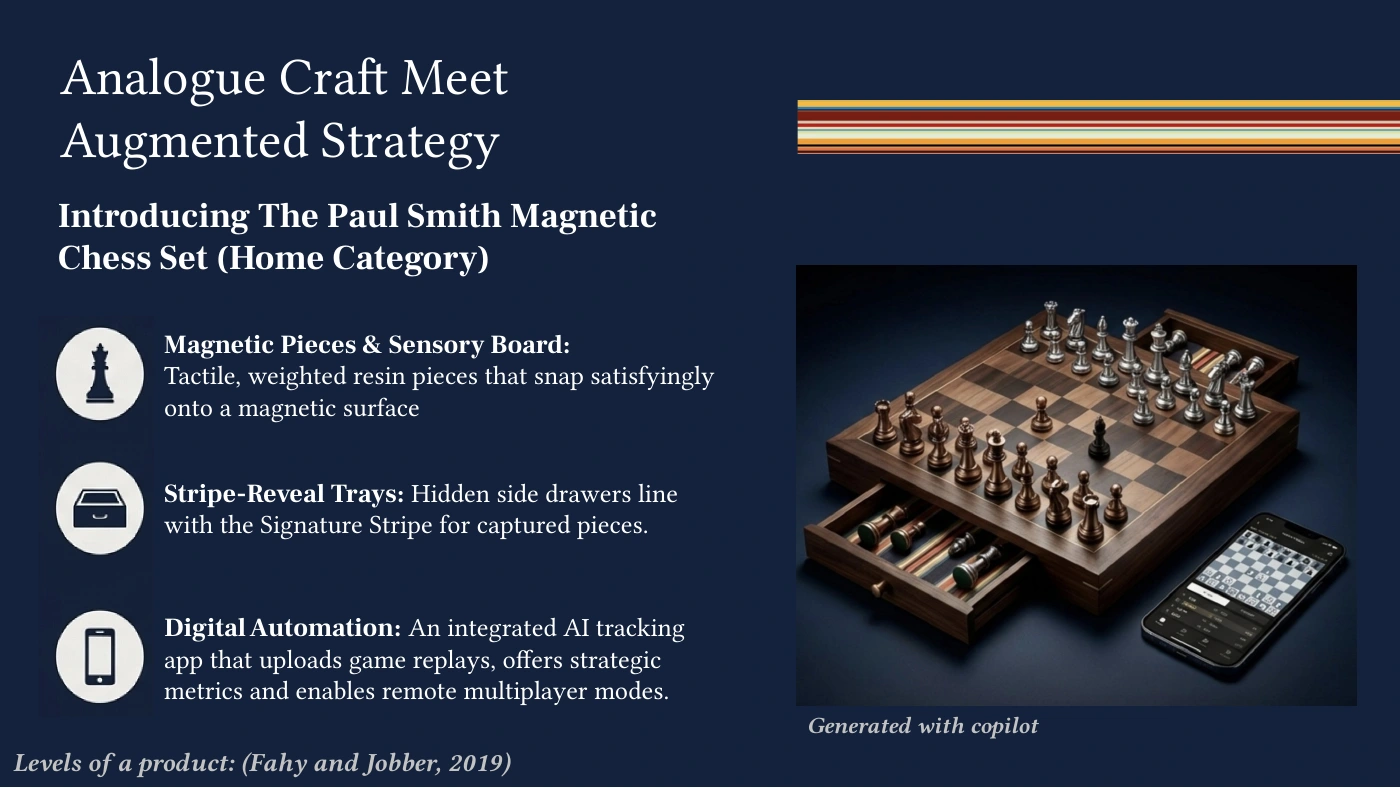
I originated the smart chessboard idea that the group chose to develop. I developed the product idea around a connection between the brand’s distinctive design language, tactile leisure and a proposed digital experience.
The final presentation was collaborative group work. The marketing analysis and slides shown here are credited to the group, rather than presented as work I completed alone.
The product proposition
The concept brought together three elements:
- Physical experience: a magnetic board and weighted pieces intended to make play feel tactile and considered.
- Brand expression: hidden trays using the signature stripe as a functional design detail.
- Digital extension: a proposed companion app for tracking games, reviewing play and remote multiplayer.
The commercial question was whether those elements could form a credible premium product, rather than adding technology simply because it was available.
From idea to marketing proposal
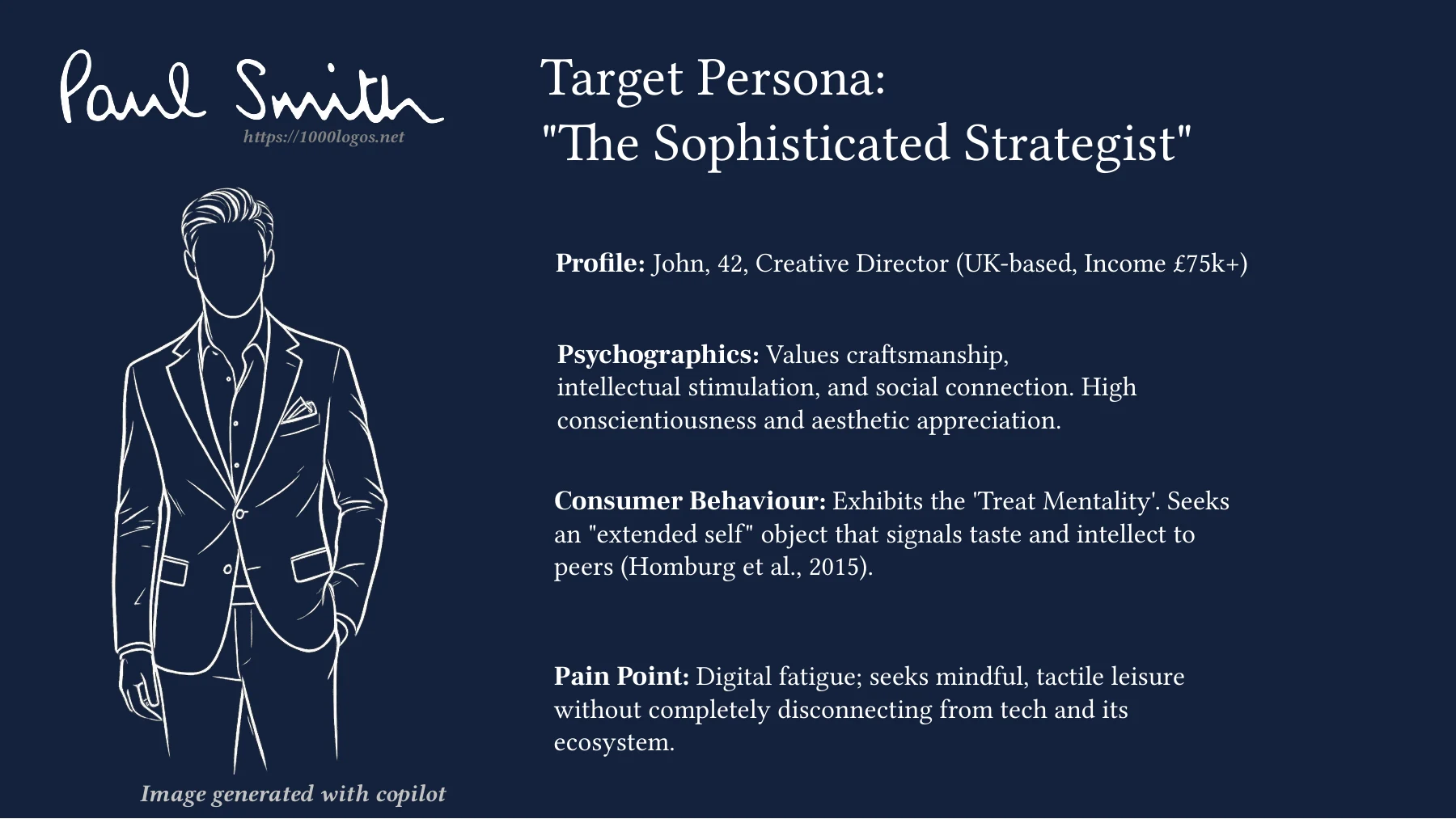
The group presentation developed the concept through a target-customer proposition, pricing, promotion and the extended marketing mix. It considered the product alongside the experience of encountering, trying and buying it.
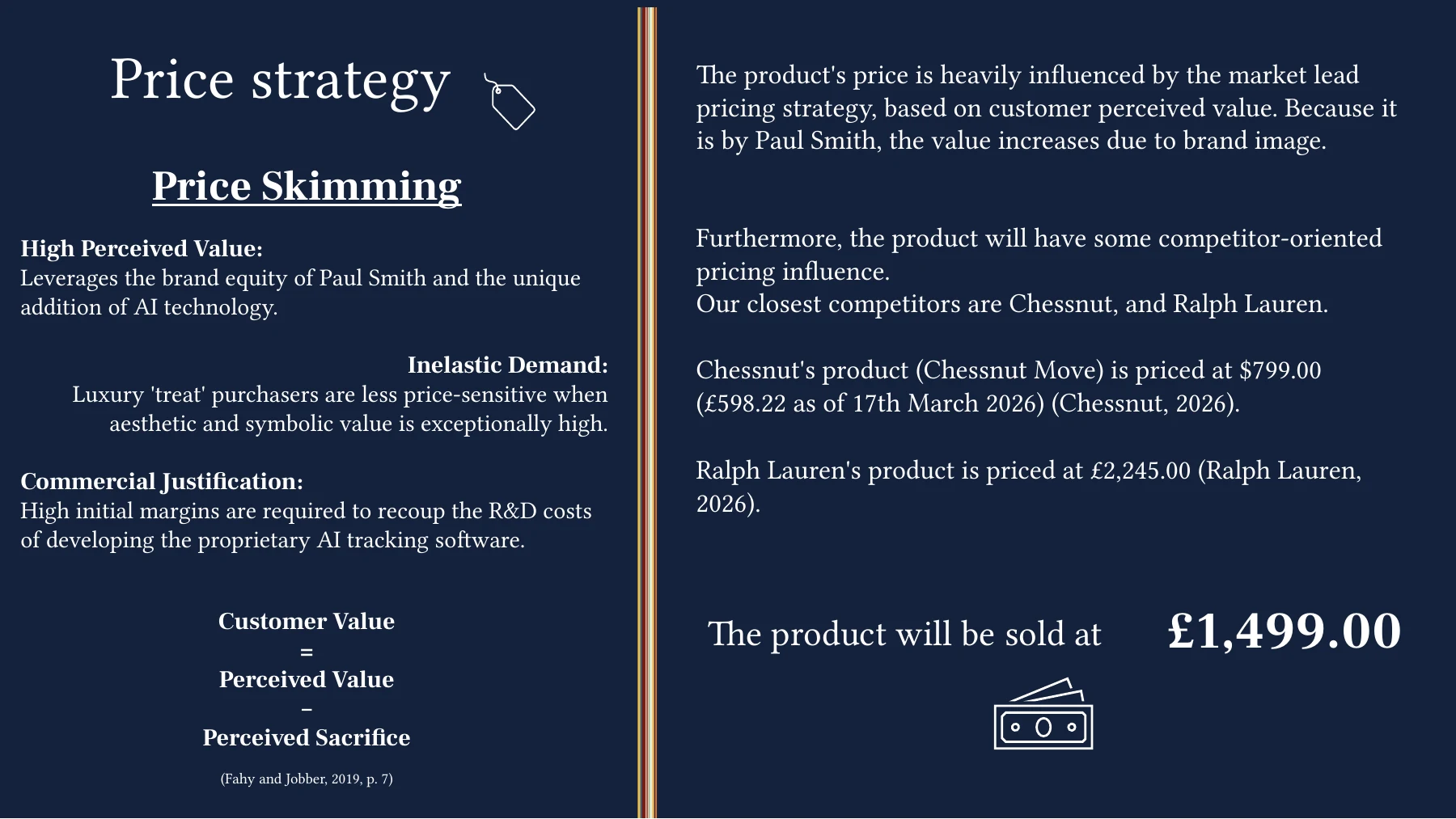
Pricing as a proposed positioning decision
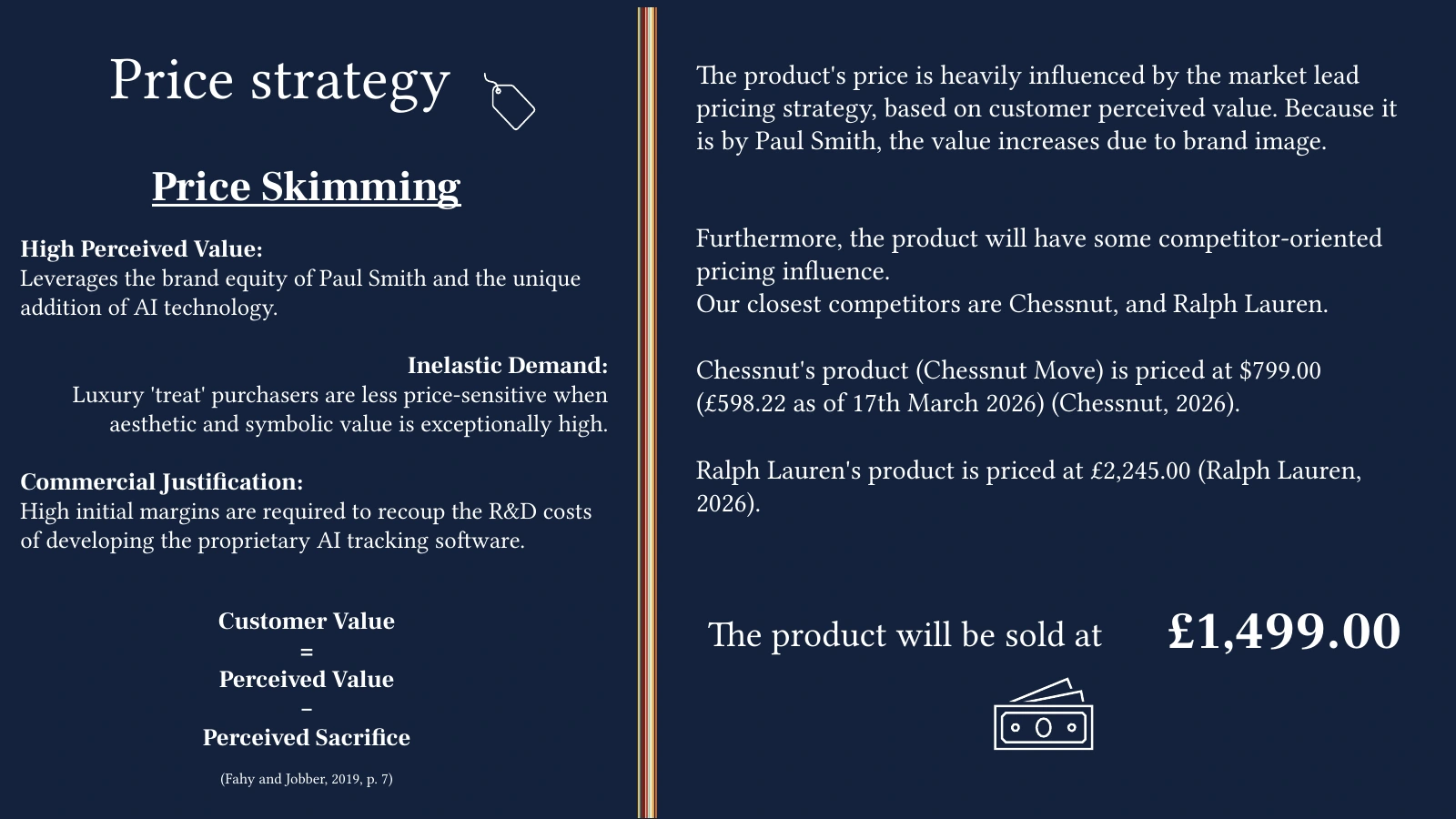
The price was a recommendation within the academic plan. The project did not establish willingness to pay, a production cost model or a realised margin.
Feedback and development
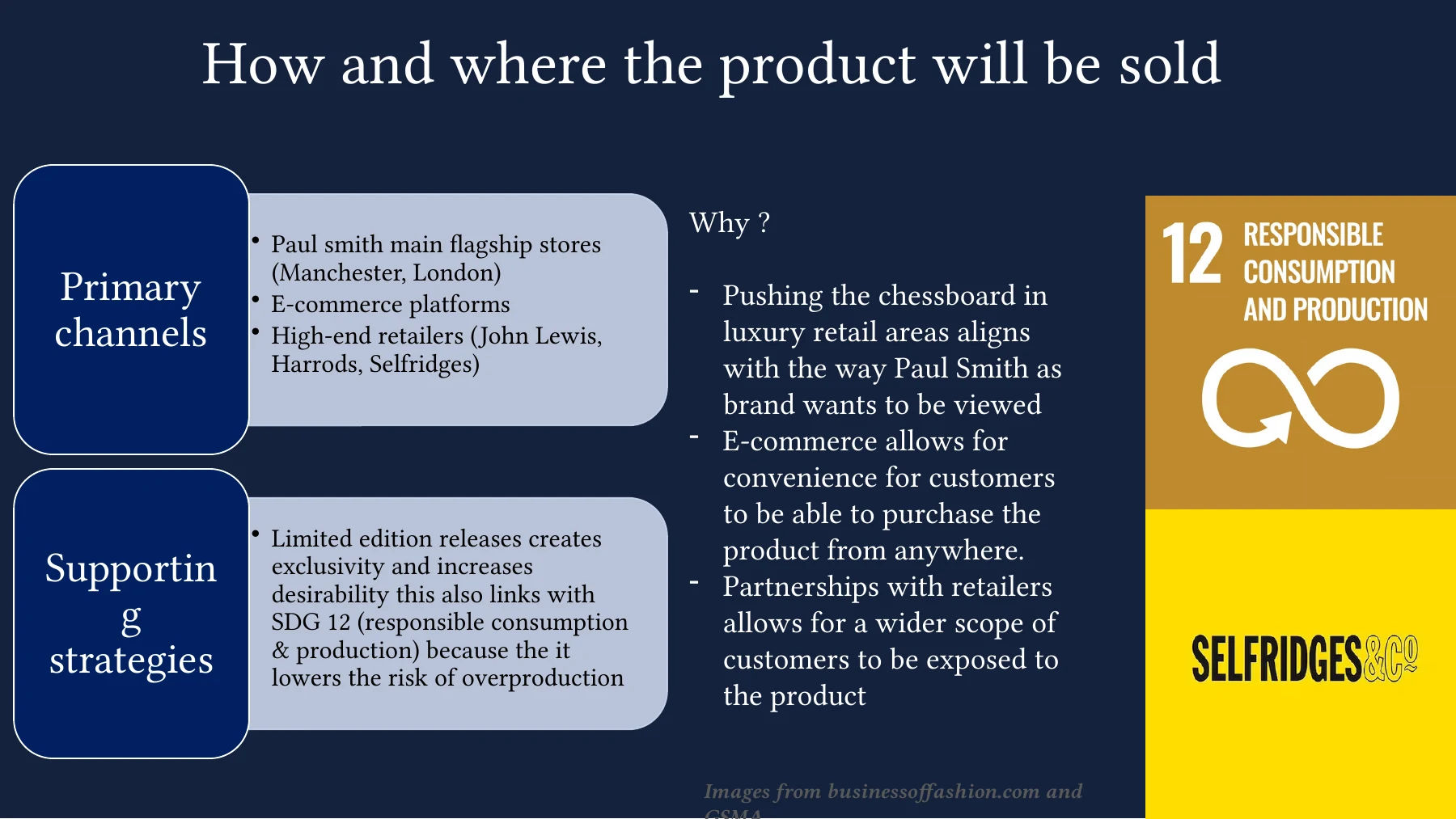
The feedback supplied for the presentation praised the concept, creativity, analysis and use of the extended marketing mix. It also identified opportunities to strengthen segmentation, supporting literature, the place discussion and the link between features, advantages and benefits.
Those points distinguish an engaging concept from a fully substantiated marketing recommendation: the argument needs evidence about the customer and a clear connection between the product, positioning and route to market.
Evidence boundaries
This is student academic work with a proposed product and AI-generated illustrative material. No product was manufactured, no app functionality is claimed, and no affiliation or endorsement by Paul Smith is implied. Only selected slides are shown; teammates’ names and student identifiers from the original presentation are not published.
Explore the presentation
Selected slides from the academic group presentation. Product features, prices and commercial arguments are proposals, not realised results. AI-generated illustrations retain their original disclosures.
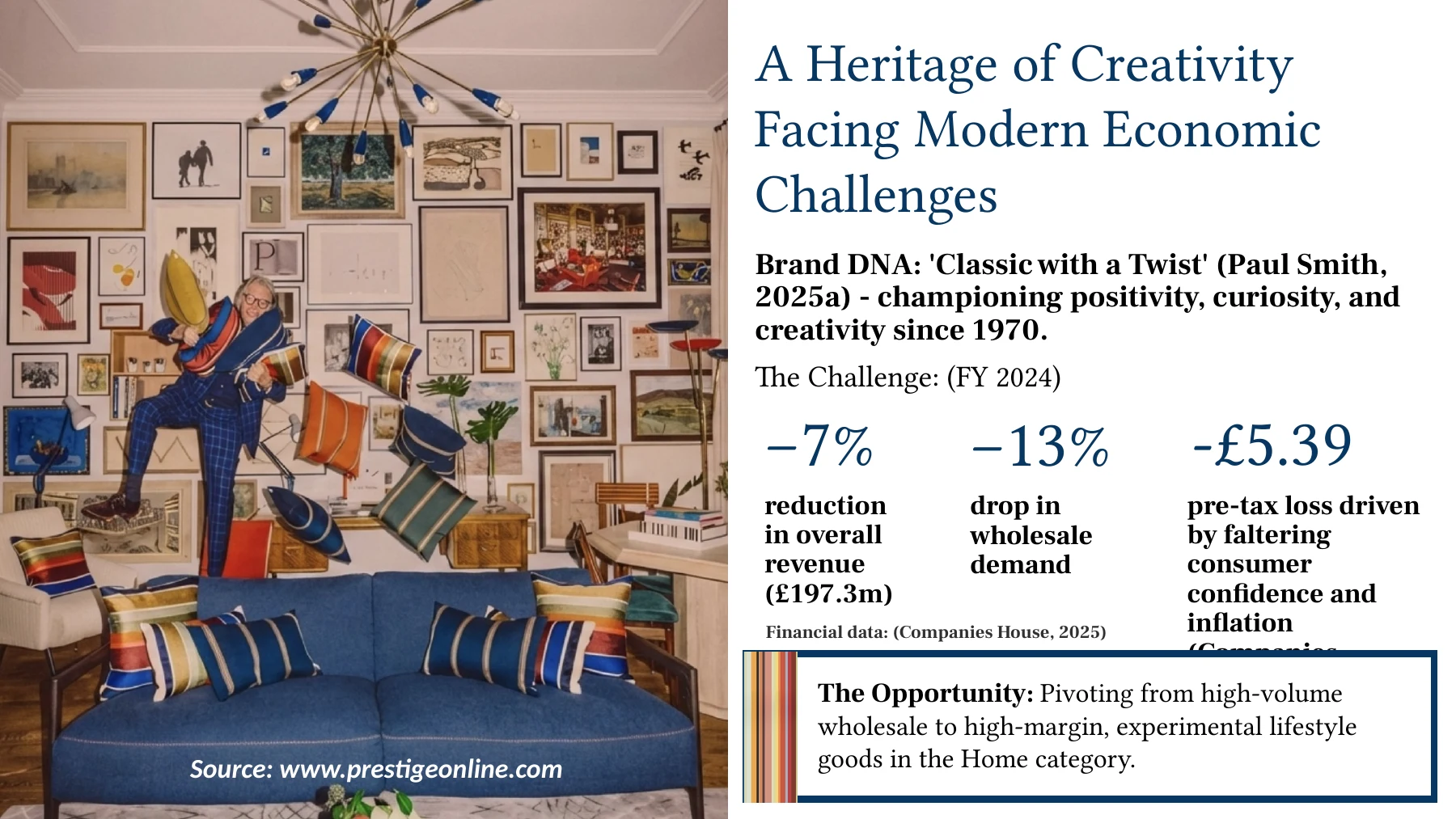
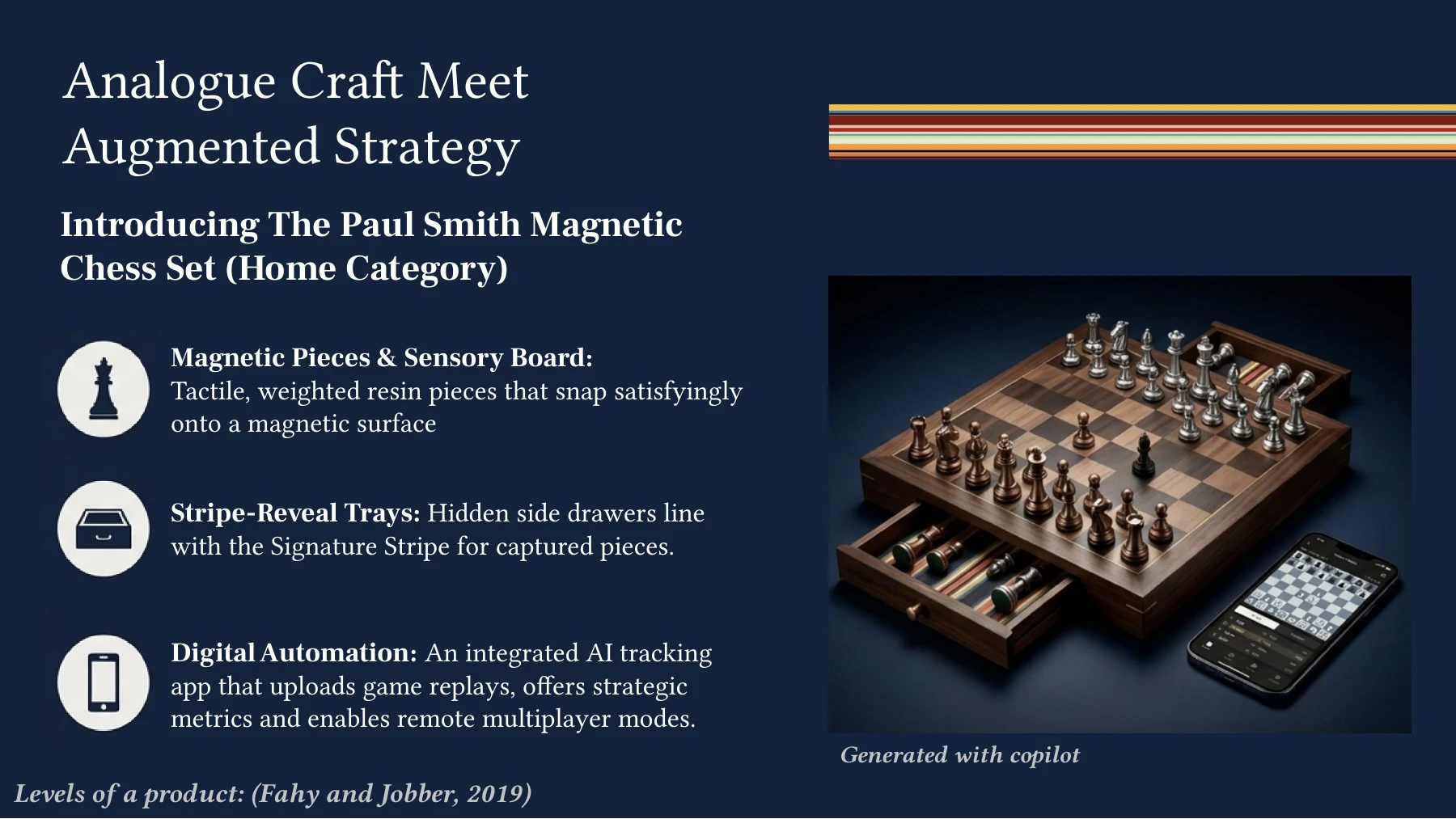
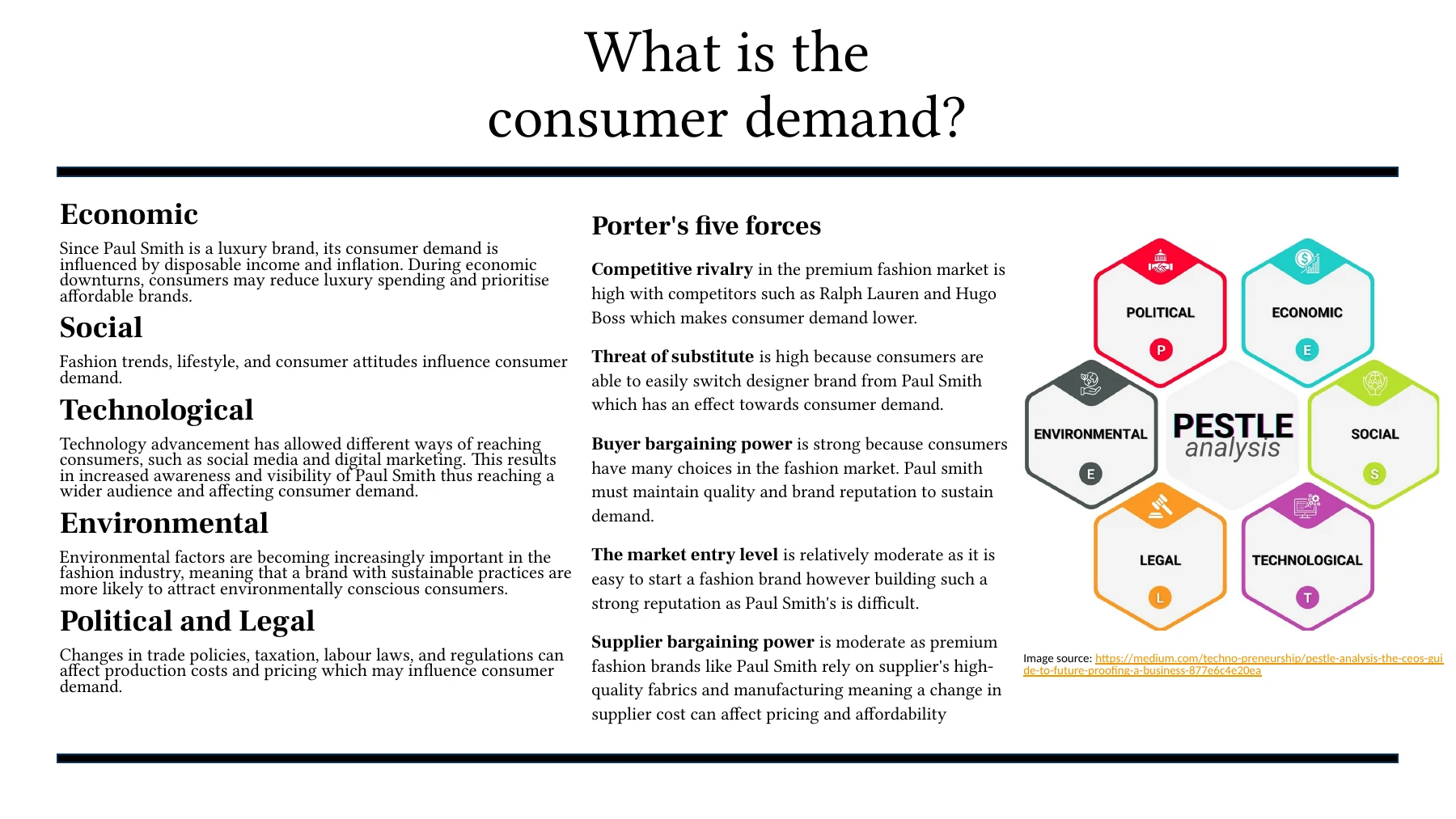
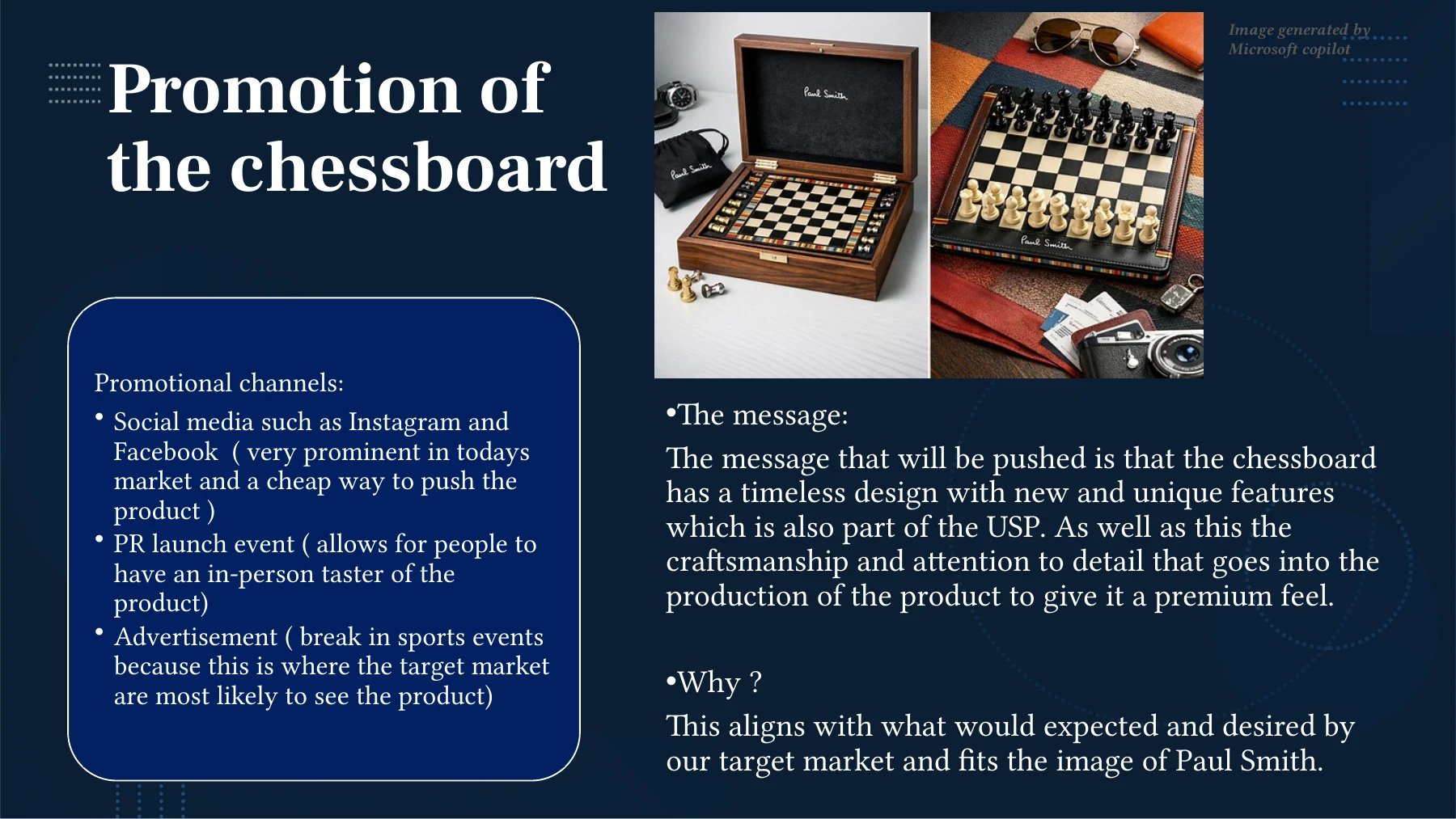
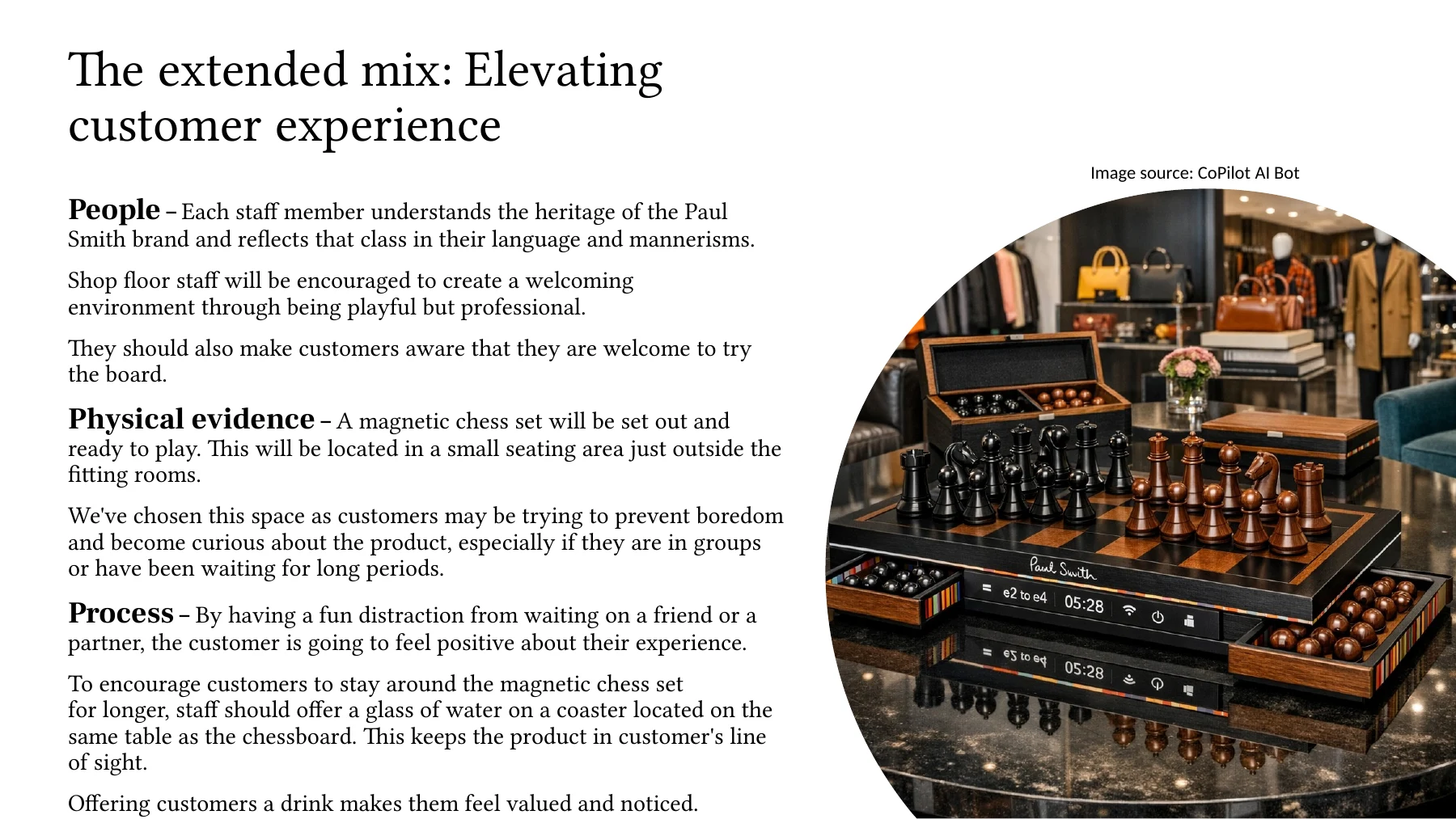
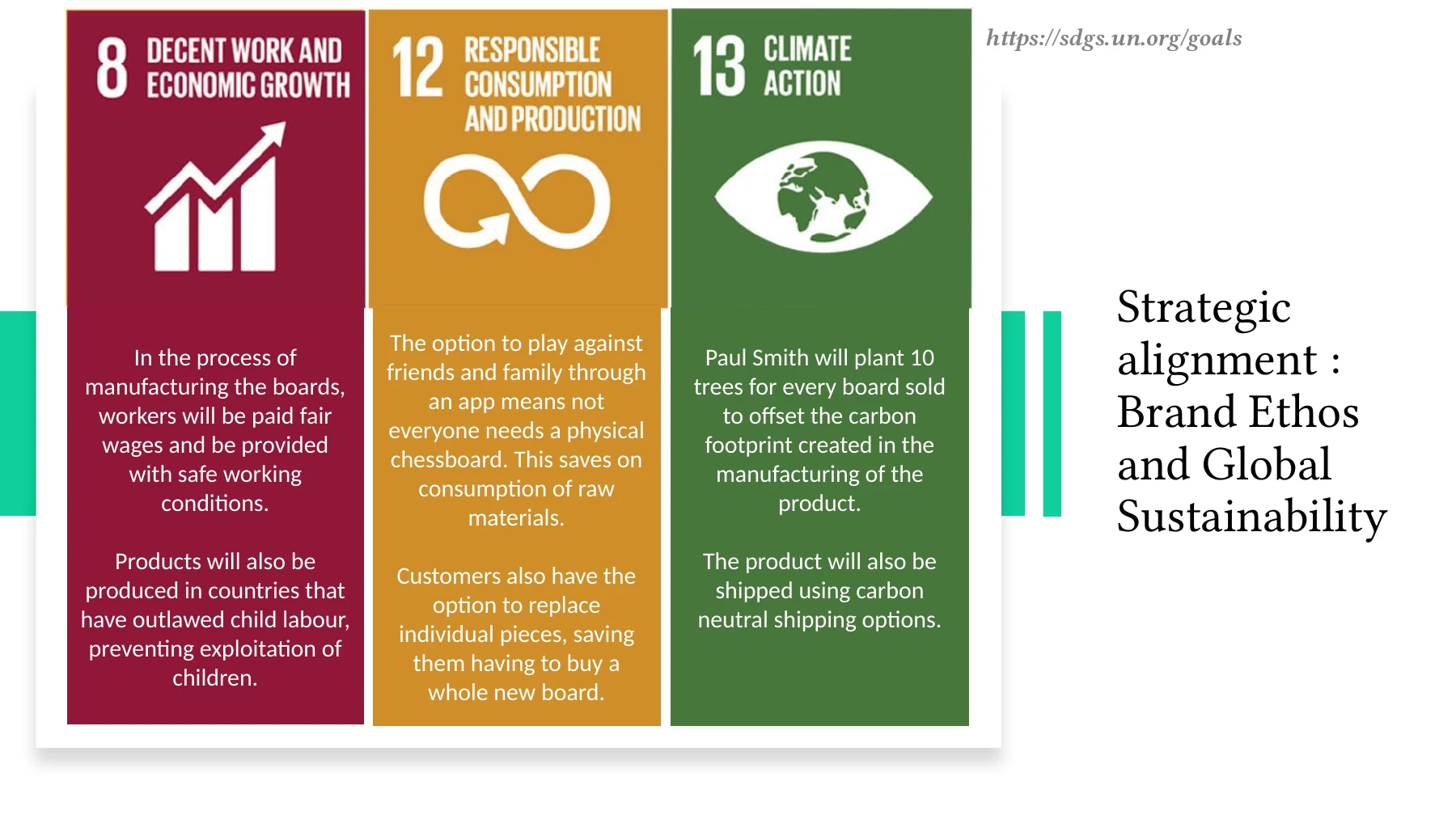
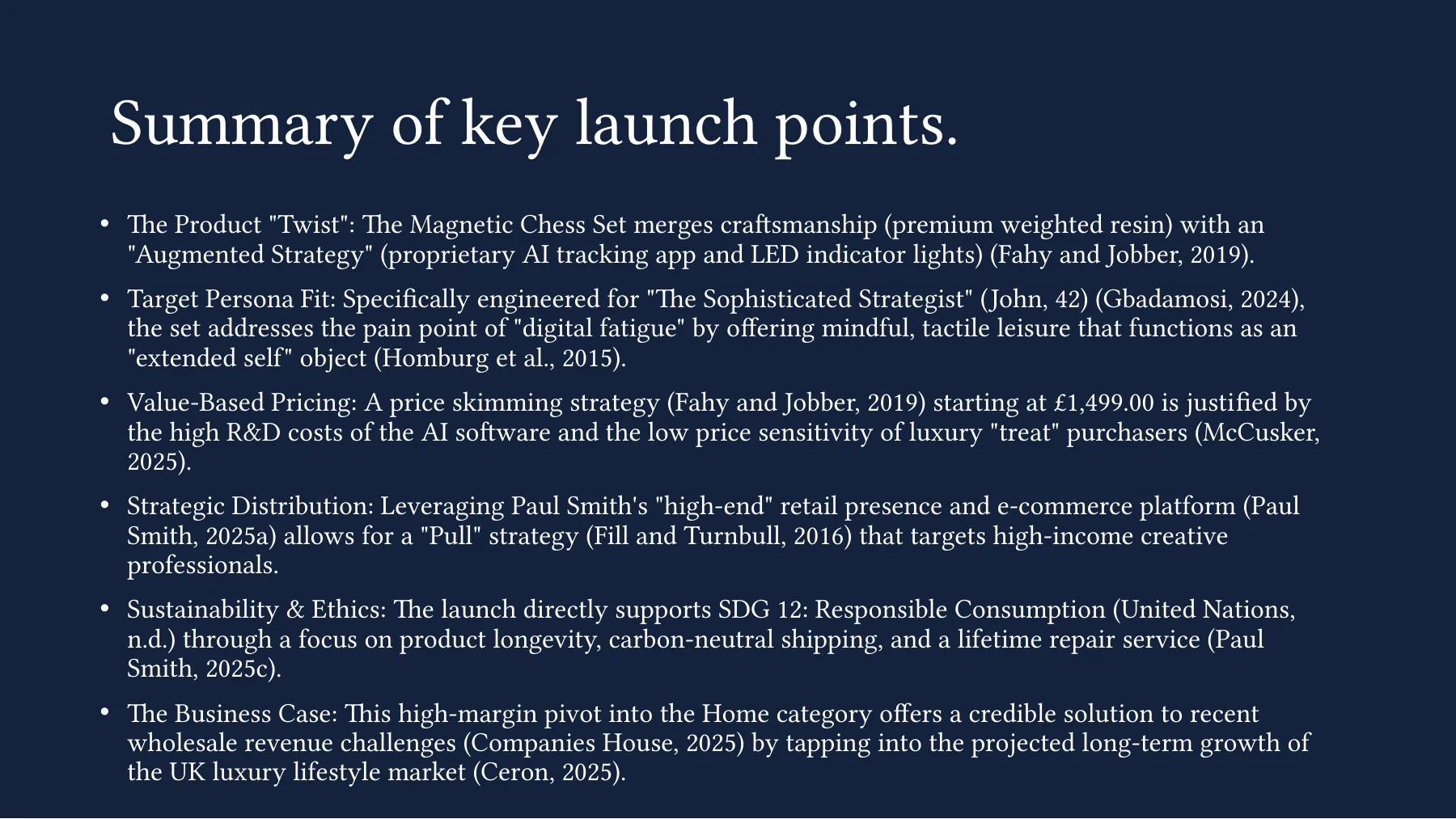
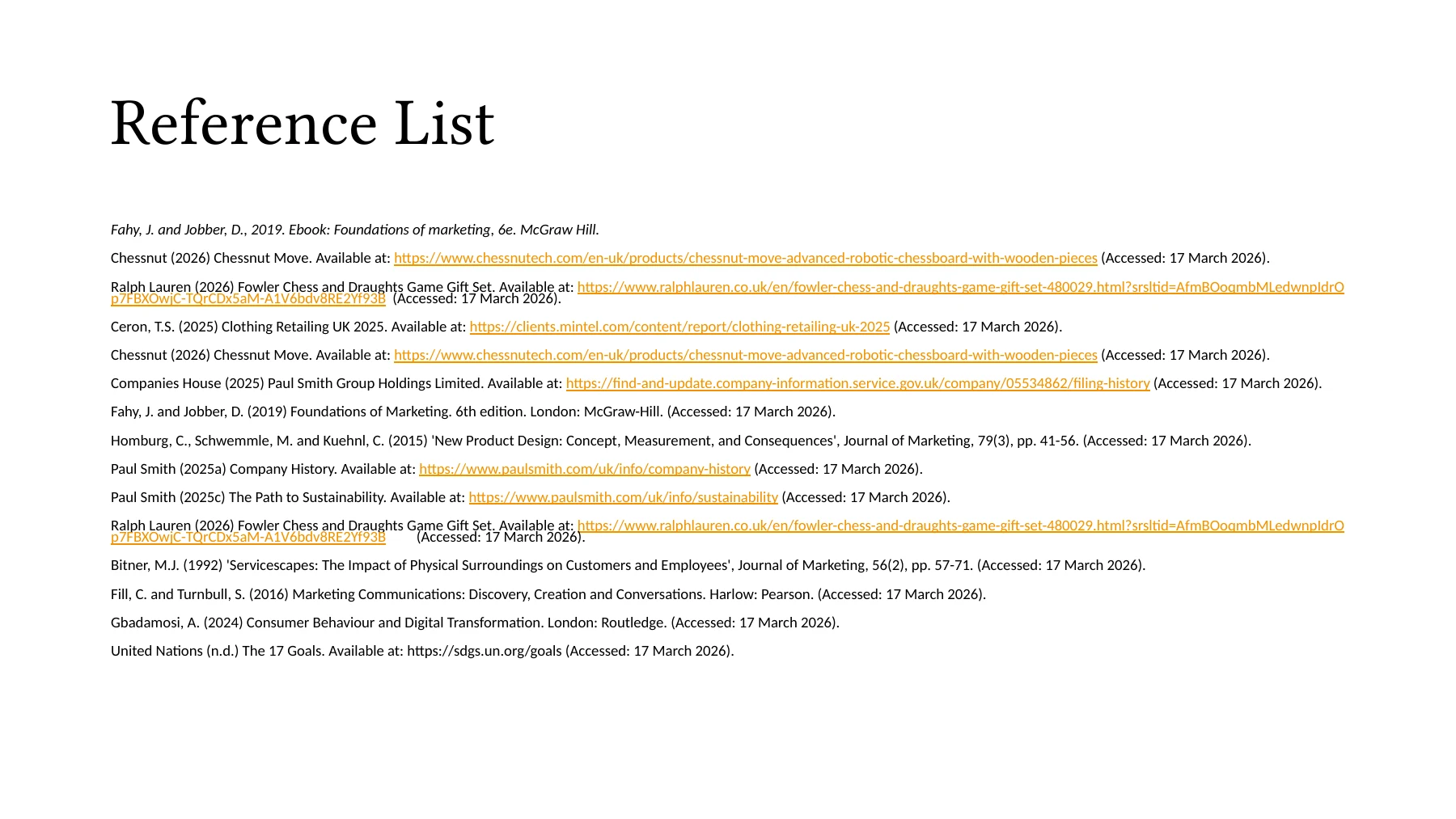
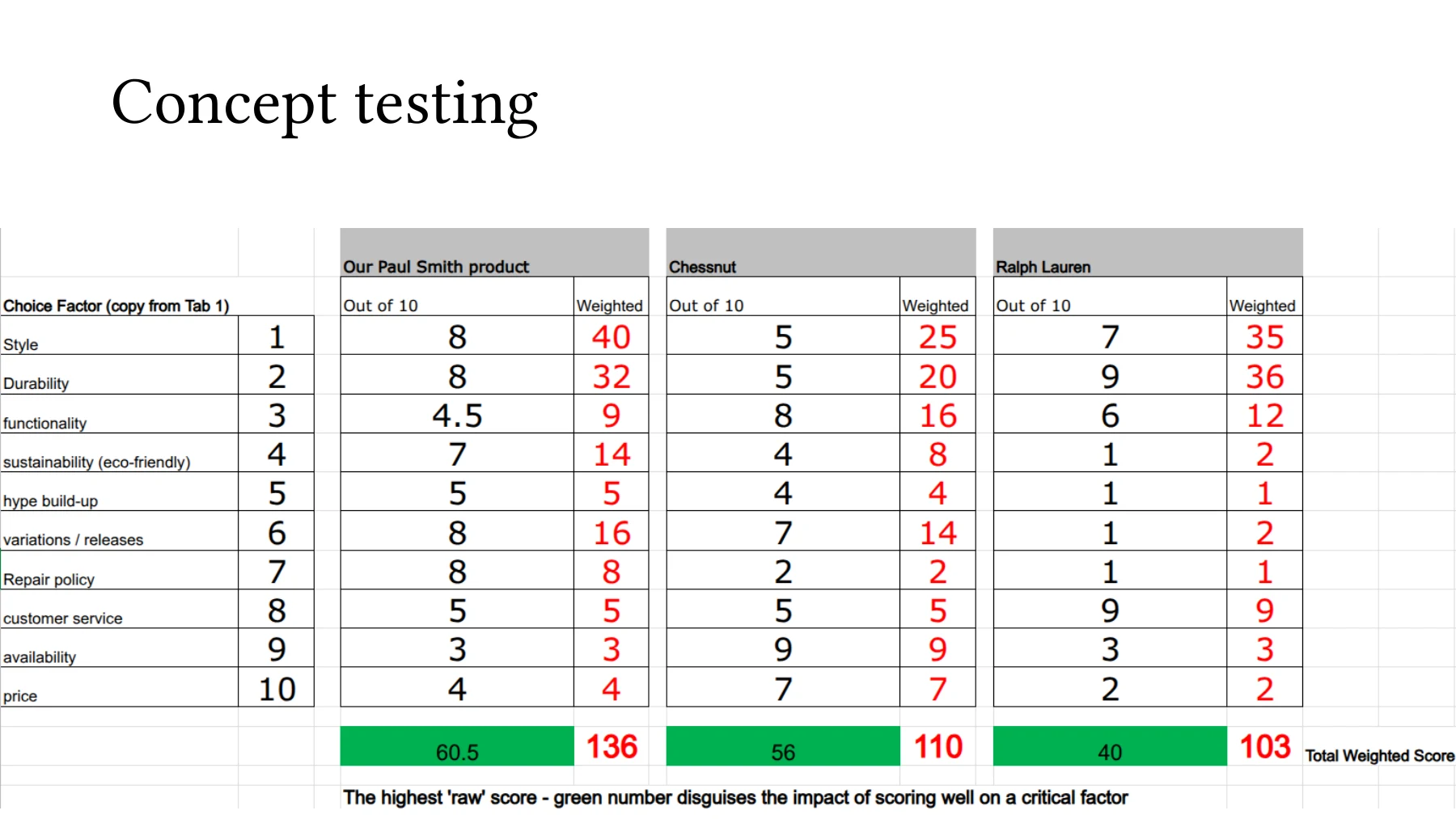
12 selected slides, preserving their original order. The title and two appendix slides are omitted because they contain names or student identifiers; the customer-value slide is omitted because its converted text overlaps. The original PowerPoint, speaker notes and metadata are not shared. Use fullscreen or “Open slide” to read fine detail.