Business development & workflow design · 2026
Etsy lead research automation
An operator-assisted workflow that combines Etsy listing research with commercial qualification, outreach drafting and structured follow-up records.
Workflow design and commercial qualification criteria; direction and testing of AI-assisted development
Inside this case study 7 sections
The opportunity
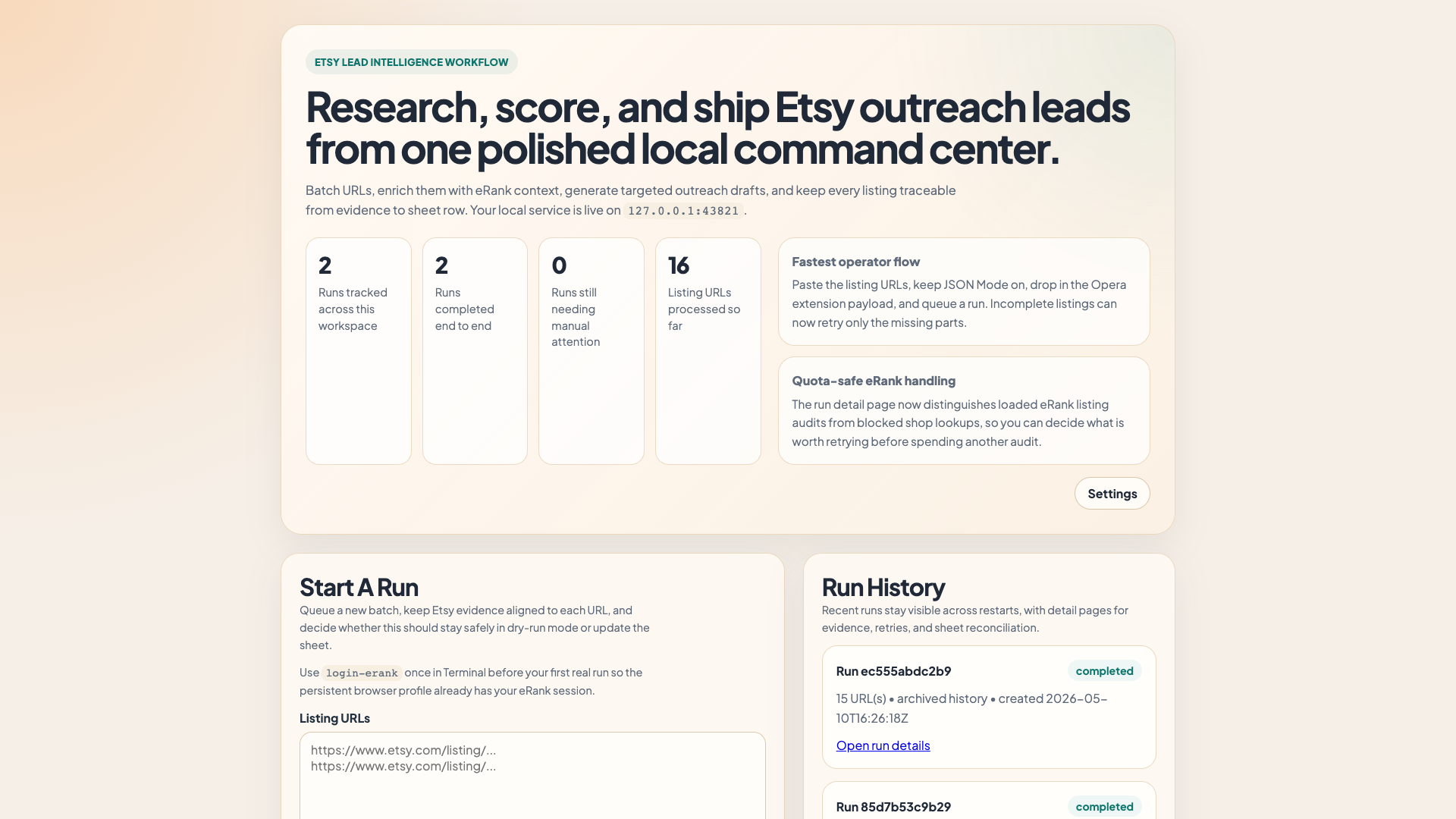
Finding a potentially interesting Etsy listing is only the beginning of useful business development work. Assessing whether to approach a seller requires context: what the listing shows, how the shop is performing, which weaknesses could be addressed, and whether the evidence is complete enough to justify a next step.
I designed the process around consistent, traceable research, with human judgment at the point of deciding whether and how to approach a seller.
The workflow was developed to support Your Store Ranks, my Etsy listing-improvement venture. It connects research to a commercial question: which sellers have a credible need for the help the service offers?
I developed and tested the system to support Your Store Ranks. It is a working internal tool, rather than a routine prospecting operation.
My contribution
I designed the workflow, commercial scoring criteria and operating model, then directed AI-assisted development and iteratively tested and refined the implementation.
That meant defining the evidence each lead record should retain, the commercial questions behind qualification decisions, and how incomplete research should be presented to the operator. The implementation is a local operator-assisted tool designed around human review.
Commercial qualification
The analyser recommends Good, Maybe or Skip. These are qualitative decisions, not numerical scores.
- Good: evidence of traction, an obvious fixable presentation issue and a credible outreach angle. A highly polished shop is less likely to need the proposed help.
- Maybe: some traction and improvement potential, but an unclear outreach angle or incomplete evidence calls for a conservative decision.
- Skip: weak demand, little meaningful scope for improvement, no credible outreach angle or insufficient evidence to justify contact.
These criteria guide the AI analyser. If analysis fails, the fallback uses simpler sales/review fields and eRank availability, explicitly recommending manual review. It should not be treated as equally reliable qualification.
Refinement through testing
During batch testing, I found that recovering incomplete records could repeat successful research and fragment the workflow. That mattered because the daily research allowance was limited.
I directed a selective-retry workflow to preserve existing evidence, complete missing research, re-evaluate the lead and update the correct spreadsheet record using its unique ID. The design addressed the recovery problem identified during batch testing and the need to avoid repeating completed research.
From listing URL to reviewable decision
- Batch the inputs. The operator provides Etsy listing URLs through a local dashboard and can return to an archived run.
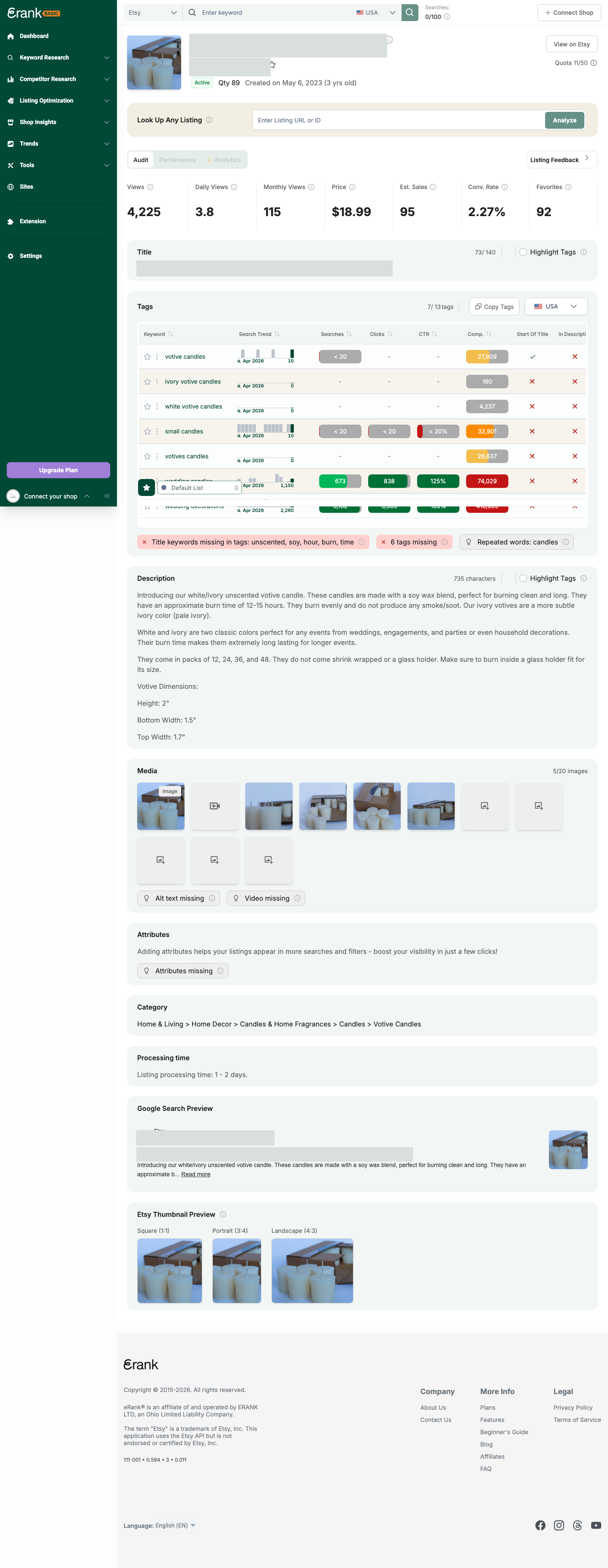
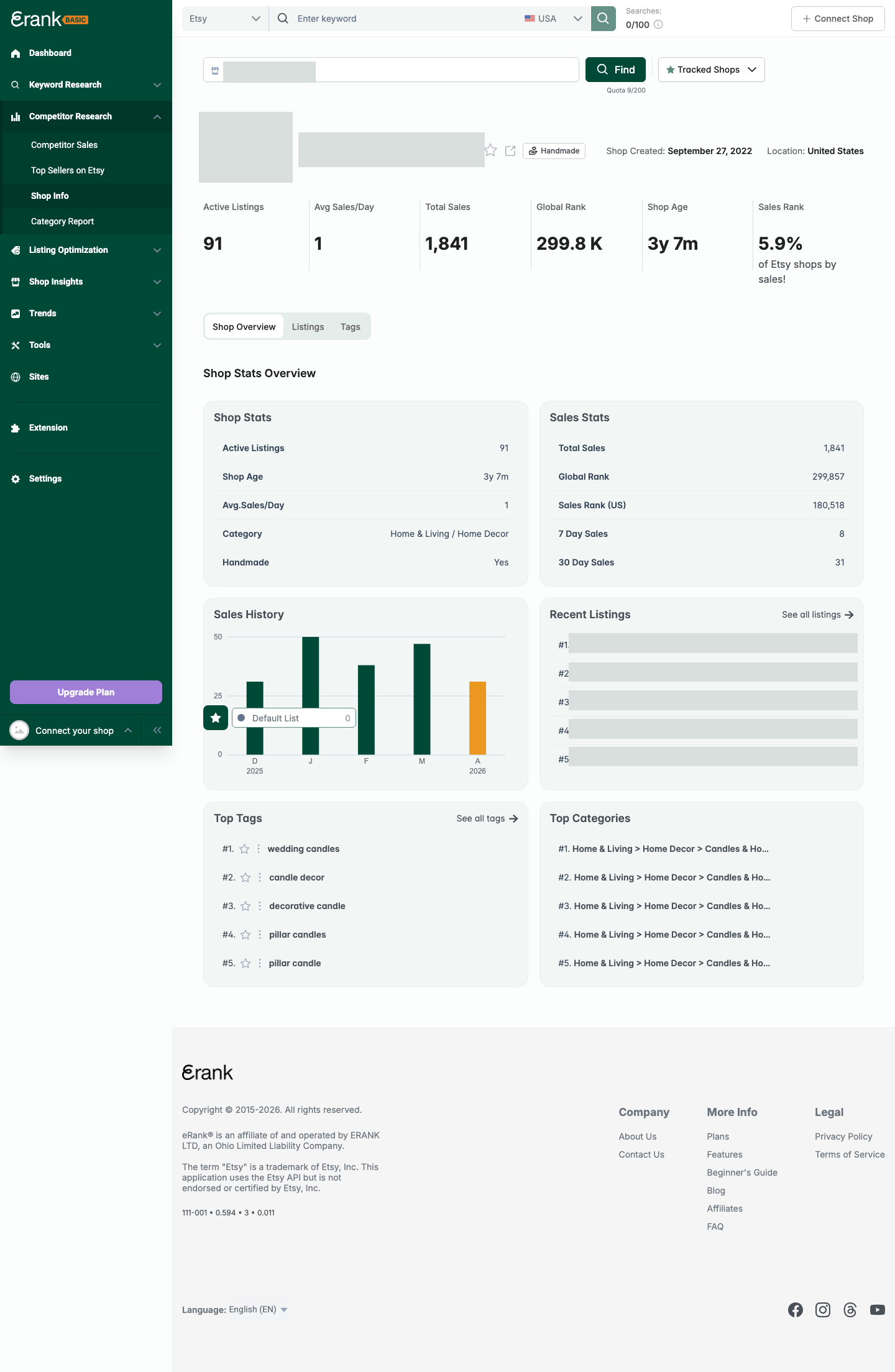
- Bring the evidence together. Listing imagery and details sit alongside genuine eRank listing-audit and shop-level research. eRank figures are research indicators; estimated sales are not verified transactions.
- Apply commercial criteria. The workflow considers demand signals, the quality of the product presentation and whether an apparent weakness offers a credible improvement opportunity.
- Prepare, then review. It produces a lead rating, an explanation and a tailored first-message draft. The operator decides whether any message is appropriate to send.
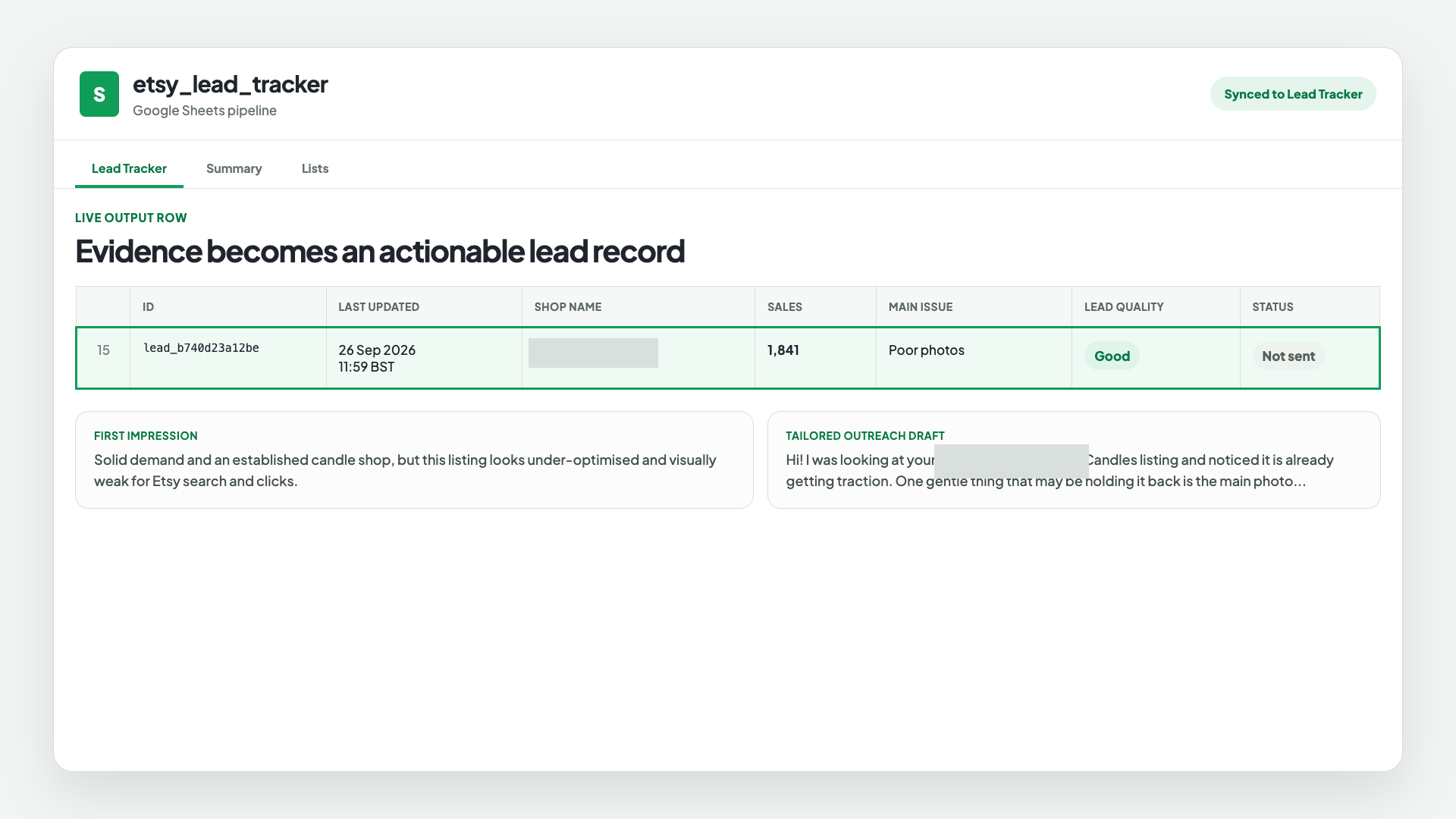
- Keep a structured record. The selected example was synced to a Google Sheets lead tracker with a stable ID, status and update time for follow-up and reconciliation.
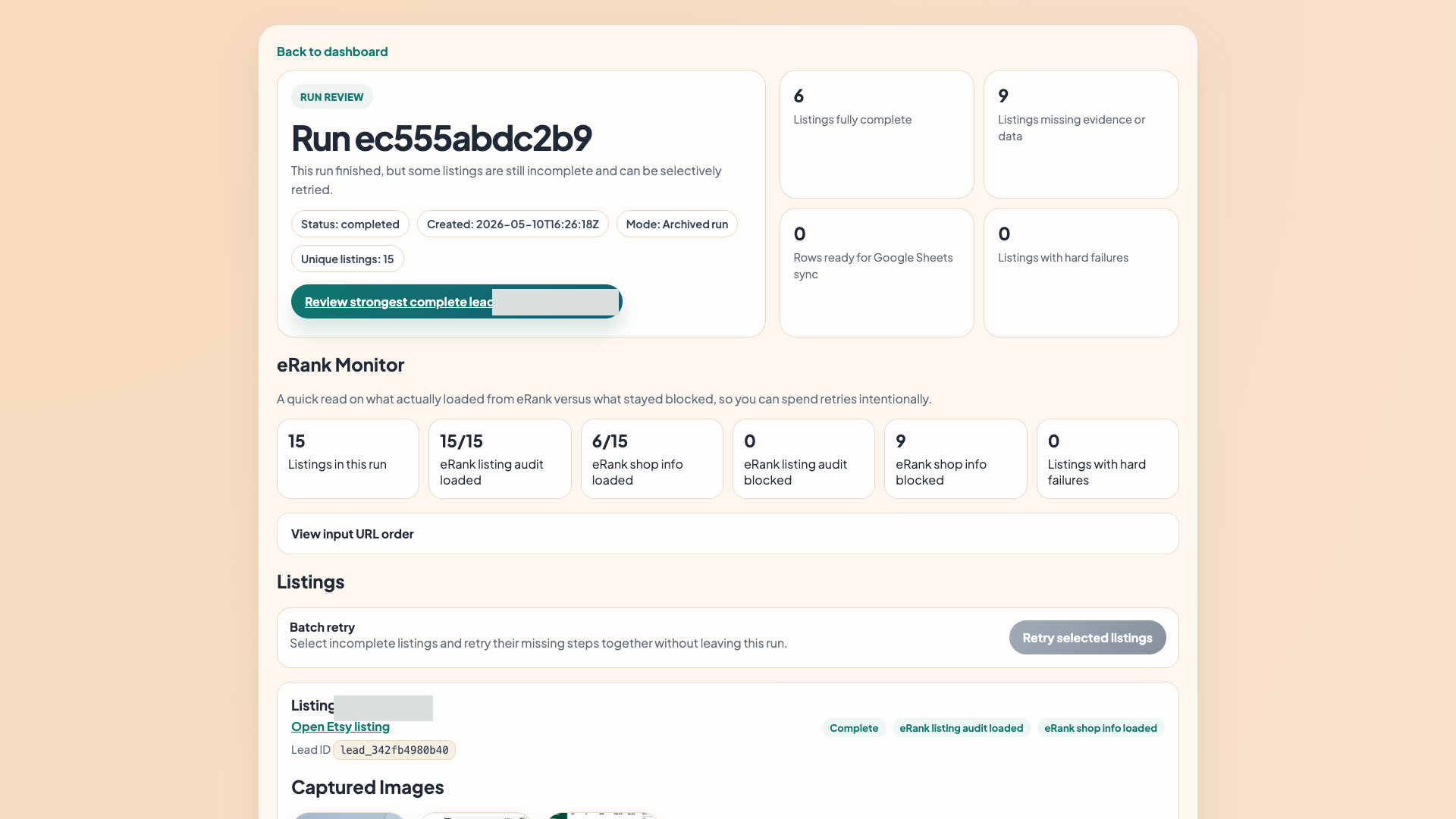
Run history and evidence coverage
Research at listing and shop level
The research step deliberately pairs a listing’s presentation with shop context. In the selected candle-shop example, the captures show an eRank listing audit and a separate shop-information view. They are third-party research screenshots, not independent verification of sales.
Qualification and a draft next step
For the selected listing, the output labels the opportunity “Good” and identifies weak product photography as the main issue. That is a rules-and-evidence-based recommendation, not a prediction that outreach will work. The message shown is a draft; the record is marked “Not sent.”
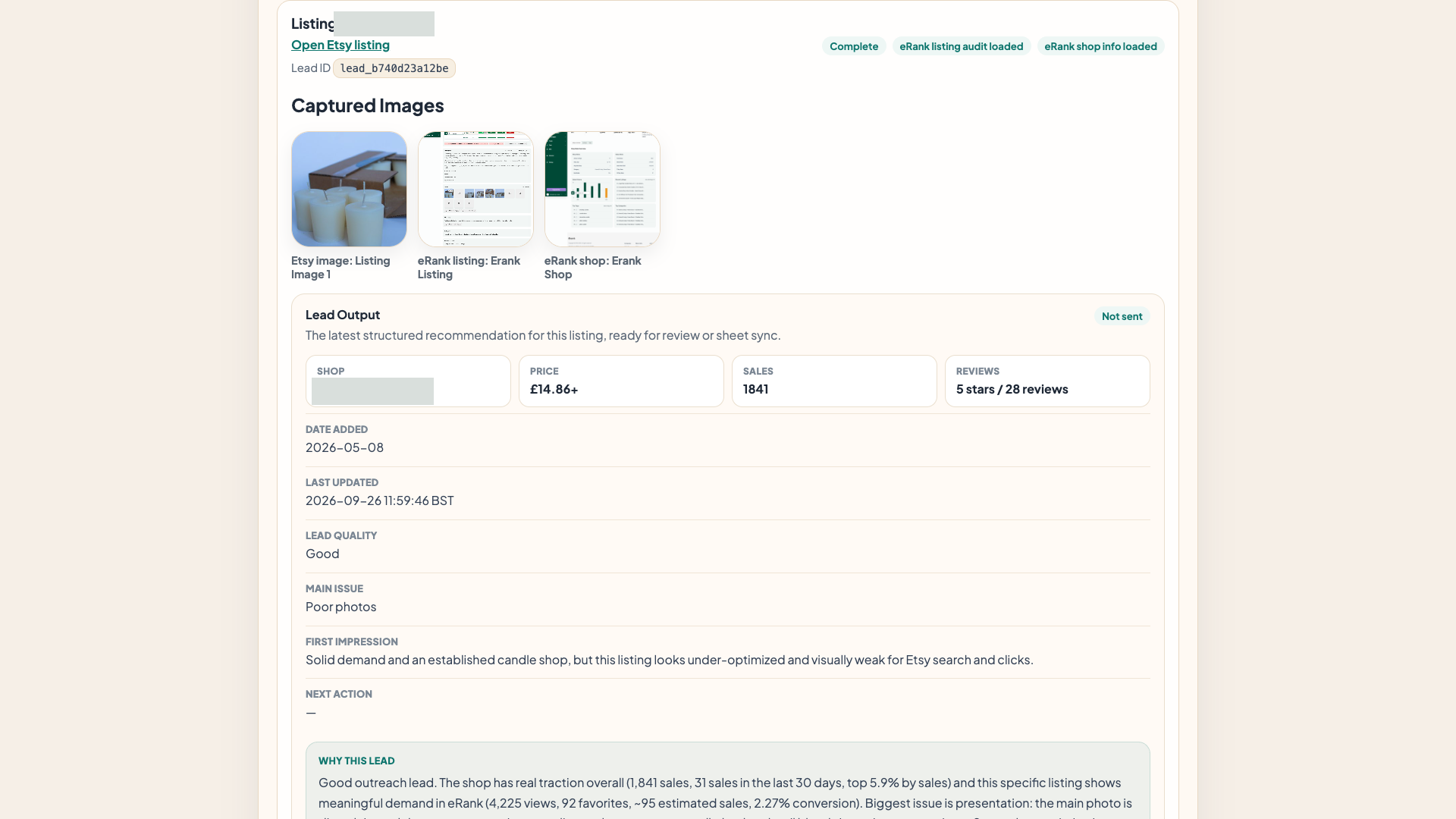
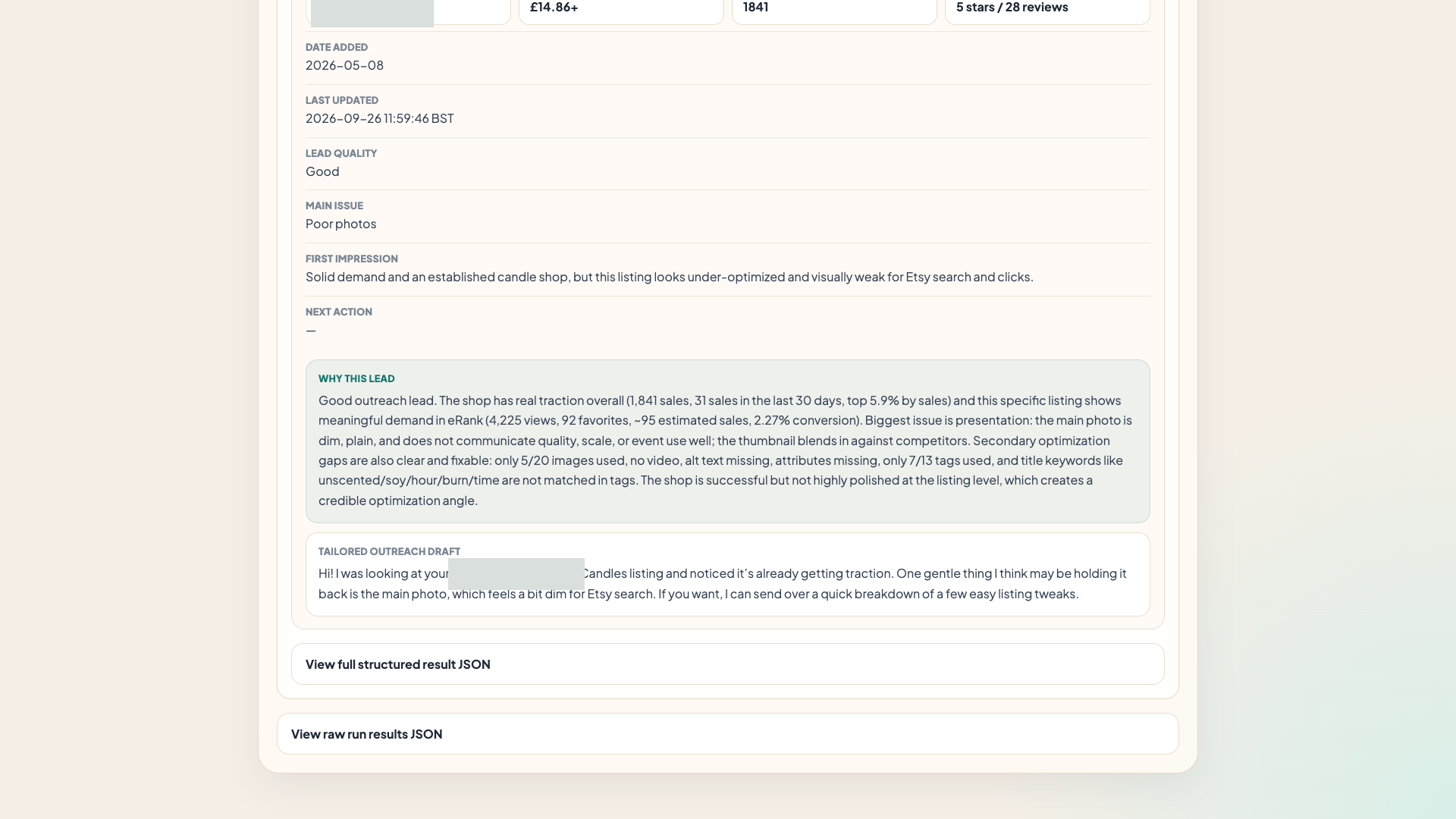
Structured follow-up
The result is designed to be useful beyond the research session: a stable ID, lead quality, main issue, status, timestamp and draft message are carried into a lead-tracking row. The view below is a presentation of the structured Google Sheets output, based on the genuine synced row. It is not a native screenshot of the live Google Sheets interface.
A short walkthrough
The 34-second recorded walkthrough above follows a prepared representative path through the dashboard, archived run, selected listing, qualification and structured output. Its final Google Sheets segment uses the presentation shown above; the video is not an unedited, real-time processing run.
The walkthrough shows batch input, a run-status review, evidence attached to one listing, a commercial lead decision and draft, then the visualised Sheet-output row.
What the evidence does - and does not - show
The archived run shows persistence and visible completion states. It also shows the limitation plainly: nine of its 15 unique listings were still missing some evidence or data at capture. The interface offers targeted retry controls, but the selected screenshots do not prove that a particular retry succeeded.
The case study does not claim that the tool runs without an operator, that every listing became a qualified lead, that outreach was sent, or that the work generated sales or replies. eRank estimates remain third-party research signals, and the example lead rating remains a judgment for review.